
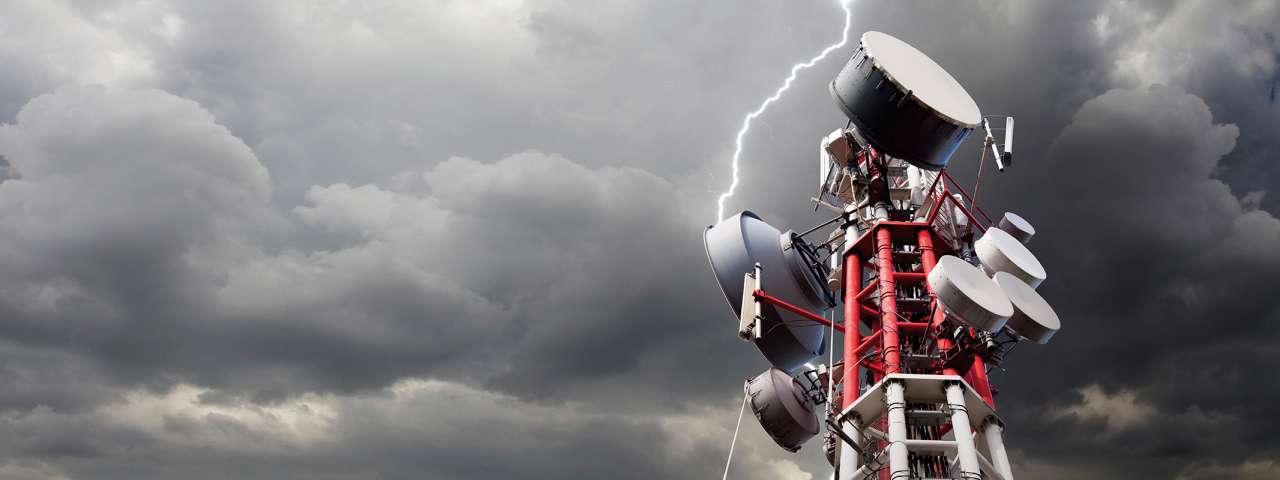
In the ever-evolving telecommunications industry, uninterrupted connectivity is paramount.
With the continuous demand growth on data transmission and communication in mobile networks, the vulnerability of these networks to electrical disturbances, particularly power surges become more and more crucial. Power surges caused by lightning strikes, grid faults, or equipment malfunctions can wreak havoc on telecommunications infrastructure, leading to costly downtime, equipment damage, and compromised service quality. Surge protection devices have emerged as the critical solution to safeguard telecommunications equipment from the detrimental effects of power surges.
Protection from Lightning Strikes: Telecom towers are often tall structures and are vulnerable to lightning strikes. Surge protection helps in diverting the excess electrical energy produced by lightning strikes away from sensitive equipment, preventing damage.
Protection from Power Surges: Power surges caused by factors like electrical faults or switching operations can also damage telecom equipment. Surge protectors safeguard the equipment by limiting the voltage levels.
The telecommunications industry employs various types of surge protection devices, each catering to specific applications and equipment protection requirements.
Primary (Service) Surge Protection Devices: Type I devices should be installed at the main power entrance or at the tower top to protect the equipment from lightning surges.
Secondary (Distribution) Surge Protection Devices: Type II devices are typically Installed at distribution panels or sub-panels to protect individual circuits within the facility.
Point-of-Use Surge Protection Devices: Type III devices are not usually used at cellular sites, but they provide localized protection against surges internal to a facility.
On the other hand, earthing is equally essential on all sites for personal safety and for equipment protection.
Safety Measures: Proper earthing is essential for the safety of personnel working on or around the telecom tower. It ensures that in case of a fault, the excess electrical current is safely directed to the ground, preventing electric shocks.
Equipment Protection: Earthing also helps in stabilizing voltage levels and providing a path for fault currents to flow safely to the ground. This protects the equipment from damage and ensures proper functioning.
Compliance with industry standards and regulations is essential when implementing surge protection devices in the telecommunications industry. The Institute of Electrical and Electronics Engineers (IEEE) publishes a series of standards for surge protection in low-voltage power circuits. Other standards include:
The UL 1449 standard outlines requirements for surge protective devices in various applications, including telecommunications. IEC 61643-11, EN 61643-11, IEEE C62.11, IEEE C62.41.2, IEEE C62.45 all have published rules for industrial surge protection use.
As telecommunications networks continue to evolve, so does surge protection technology. Advancements in SPD design and their integration with smart networks will continue as 5G and next-generation networks are built.
In conclusion, surge protection and earthing are critical components of the safety, functionality, and longevity of telecom towers. By implementing these measures, telecom companies can safeguard their equipment, minimize downtime, and ensure the safety of their personnel.
#LinkHat #SurgeProtection #SPD#LightningProtection #Energyefficiency #OperationalEfficiency #5G #Sustainability #Innovation #Partner #Energy #Telco #Telecom #Powerfortelecom #CleanEnergy #RenewableEnergy
Contact us to learn how we can support your M&A strategies
Follow closely and receive content about our company and the news of the current market.
Contact us to learn how we can support your M&A strategies
Follow closely and receive content about our company and the news of the current market.